
Read. Play. Build a Thinker.
At Your Literally, we’re more than a resource—we’re your Lit Ally in raising thoughtful, curious kids in a world full of distractions. We believe children learn best when they can read, play, and make meaning from the world around them.
Literacy isn’t built from reading alone. It grows through language, conversation, curiosity, and hands-on experience—and it starts simply. When you read aloud with your child, even for just ten minutes, you’re building vocabulary, comprehension, and connection. Over time, books become more than stories. They become invitations to think, wonder, and understand the world.
And when the book closes, the learning doesn’t stop. The small, in-between moments waiting at a restaurant or appointment, riding in a car, on an airplane, sitting with nothing to do are where so much growth can happen. That’s where we come in. Through our supported read-aloud sets and B²: Building Brains Busy Bags, we give you simple, screen-free ways to turn everyday moments into meaningful opportunities for learning through words and play.
Because unplugged doesn’t mean doing less—it means choosing what matters most. And when children are given the chance to read and talk with you, explore materials, and figure things out, they’re not just passing time.
They’re building their brains.
Play With Purpose and Ease
Keeping kids engaged without screens doesn’t have to feel overwhelming—not with the right lit ally in your corner.
Your Literally takes the guesswork out of screen-free play by putting purposeful, ready-to-use tools directly in your hands:
Curated Busy Bags filled with thoughtfully selected, hands-on materials
Individually wrapped provocations that invite curiosity, creativity, and exploration
Simple, meaningful ways to build focus, problem-solving, and independence—while your child plays and you enjoy calmer, more connected moments
Why It Works: The Power of Play
At Your Literally, our Busy Bags aren’t just about keeping children occupied—they’re designed around what research tells us about how children build focus, language, and thinking through hands-on experience.
When children open, sort, stack, and create, they’re strengthening the brain systems responsible for attention, memory, and problem-solving.
Play Builds the Brain
The Harvard Center on the Developing Child explains that hands-on, active experiences help build strong brain architecture—especially in early childhood—because children are actively making sense of the world, not just observing it.
As children interact with materials, they naturally begin to talk, describe, imagine, and tell stories.
Play Fuels Language Development
Research has shown that oral language—what children say and understand—is a key driver of later reading comprehension. The more children talk and think through their play, the stronger their reading foundation becomes.

Attention and self-regulation aren’t fixed—they grow over time.
Focus Is Built Through Practice
The American Academy of Pediatrics emphasizes that play is essential for developing executive function skills like focus, persistence, and flexible thinking. Children build these skills by engaging, trying, and working through challenges—not by passively consuming content.
Hands-On Play Supports Writing Readiness
Simple actions—like opening containers, manipulating small objects, or tearing paper—build fine motor strength and coordination.

According to the National Association for the Education of Young Children, these early motor experiences are directly connected to later writing development, helping children gain the control and endurance they need to write with confidence.
When children sort, group, and create patterns, they’re developing foundational math concepts like classification, sequencing, and spatial reasoning.
Play Builds Early Math and Problem-Solving Skills
Math education research, including work by Megan Franke, highlights that recognizing patterns and organizing ideas are critical building blocks for mathematical thinking.

What looks like boredom is often the starting point for creativity and problem-solving.
Boredom Leads to Growth
The American Academy of Pediatrics notes that unstructured play gives children the space to imagine, create, and develop independence—skills that support learning across all areas.
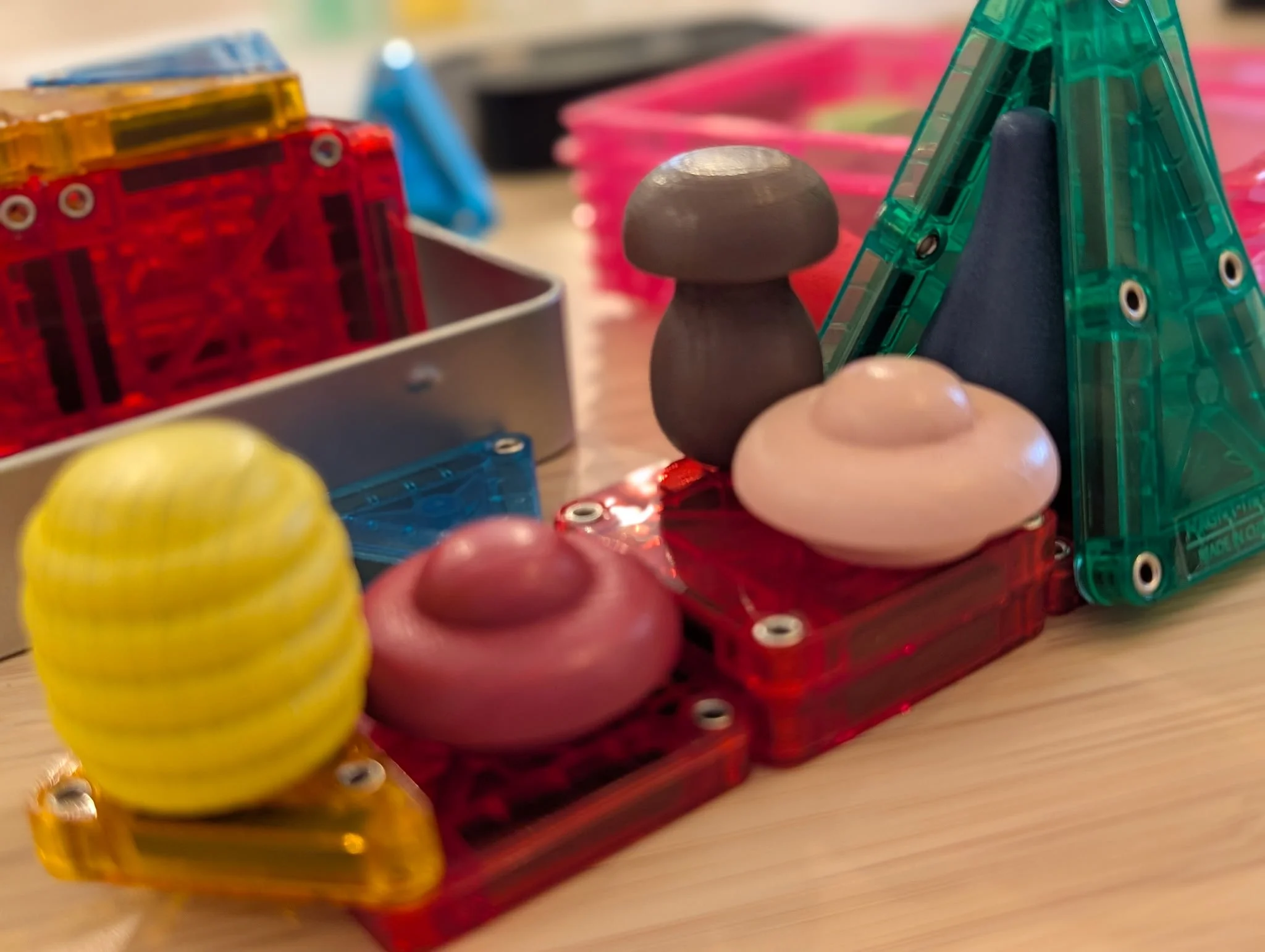
Busy Bags aren’t just about passing time.
They’re designed to help children build focus, language, coordination, and thinking—through play.
Because when children are given the chance to engage, explore, and figure things out…
they’re building their brains.